Contact Crayfish.io for help to find your right strategic partner.



China’s healthcare sector presents enormous opportunity — but success depends on one critical factor: finding a right local partner. For Serchem, entering China was not simply about appointing a distributor. It was about building a trusted, long-term presence in one of the world’s most complex and rapidly evolving healthcare markets.
How did Serchem succeed in finding the right local partner? Crayfish.io spoke with Edward Grainger, International Sales Director at Serchem, to provide practical insight for companies considering China as part of their international growth strategy.
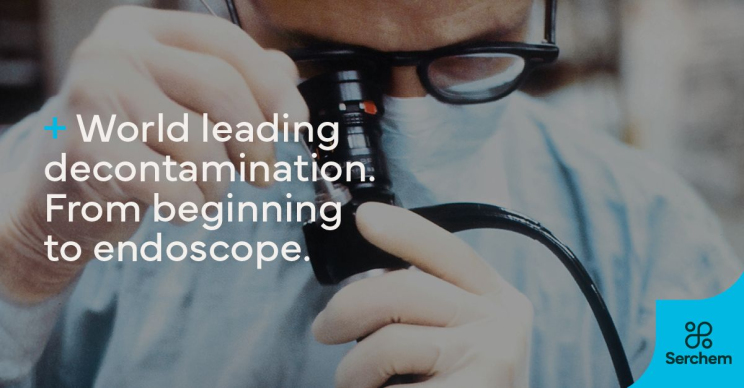
Serchem Limited is a UK-based manufacturer specialising in decontamination and hygiene chemistry, with more than 40 years of industry experience. The company develops products used in critical healthcare environments including CSSD, endoscopy and operating theatres, currently supplying a significant portion of the NHS.
Its portfolio includes enzymatic detergents, disinfectants, and endoscope reprocessing solutions — all designed to support safe, consistent infection control and patient safety. Today, Serchem distributes its hygiene solutions to international markets including Europe, Asia, and the Middle East.
Recently, Serchem successfully entered the Chinese market by forging a partnership with Zenmindes. Below, Edward shares the story behind their China journey.
Serchem is a UK-based manufacturer specialising in decontamination and hygiene chemistry for the healthcare sector.
Our product range supports critical areas such as CSSD, endoscopy and theatre environments, and includes enzymatic detergents, disinfectants, instrument cleaners and endoscope reprocessing solutions. Each product is designed with one objective in mind – to support safe, consistent and effective infection control practices that protect patients.
At the heart of what we do is a simple but essential principle: ensuring reusable medical devices are cleaned, decontaminated and prepared to the highest possible standard. In healthcare, there is no margin for error, and that responsibility underpins everything we develop and deliver.
We manufacture the majority of our products in-house at our UK facility, which gives us a high level of control over formulation, quality and responsiveness. This is complemented by carefully selected partner products where appropriate, ensuring we can offer complete, well-supported solutions. Our quality framework includes ISO 9001 and ISO 14001, MDR registration and, most recently, ISO 13485 certification, which further strengthens our ability to support regulated healthcare environments globally.
Internationally, we work through specialist distribution partners who share our commitment to quality and patient outcomes. Our model is built on collaboration – not simply supplying products, but providing training, technical expertise and ongoing support to ensure our partners and their customers can operate with confidence.
Serchem’s domestic business has been built around the NHS, and that foundation plays an important role in how we are positioned internationally.
Our products are developed and validated in line with UK Health Technical Memoranda (HTM), which define the standards for decontamination practice across NHS hospitals and trusts. These are widely regarded as some of the most robust and comprehensive guidelines in global healthcare, covering everything from process control and validation through to day-to-day operational practice.
Today, Serchem supports a significant number of NHS hospitals and trusts, working closely with sterile services, endoscopy and theatre teams to help maintain consistent and reliable decontamination processes.
For our partners in China and other international markets, this provides an additional level of reassurance. The NHS is recognised globally for its rigorous approach to patient safety and clinical governance, and the fact that our products are developed against these standards reflects the level of quality and compliance built into our offering.
When we work with international distributors and healthcare providers, we bring not only our products, but also the experience of operating within one of the world’s most demanding healthcare environments. This includes our approach to validation, technical support and training, ensuring that our partners are equipped to apply best practice in their own settings.
As regulatory expectations continue to evolve globally, we see our alignment with NHS standards and internationally recognised certifications as a strong foundation for supporting healthcare providers with confidence.
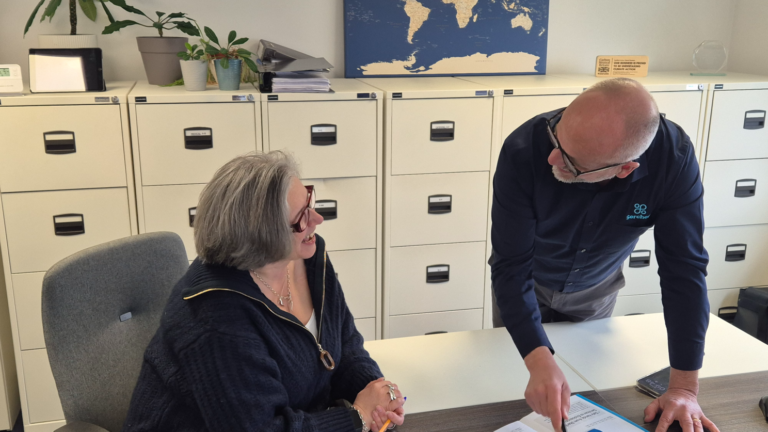
In endoscope decontamination, the effective removal of protein residues and biofilms is fundamental, and it is an area where chemistry plays a critical role.
Serchem’s enzymatic detergents, including our TripleZyme range, are formulated with four active enzymes – protease, amylase, lipase and cellulase – selected to break down the full spectrum of organic soiling typically encountered in clinical environments. This multi-enzyme approach supports effective cleaning across a wide range of contaminants, helping to ensure instruments are properly prepared for subsequent disinfection or sterilisation stages.
Our approach to product development is rooted in performance and practicality. We benchmark our formulations against established global providers and focus on delivering both efficacy and efficiency in real-world healthcare settings. In practice, that means developing products that perform reliably at the correct dilution, supporting consistent outcomes while also maintaining cost-per-cycle efficiency.
In decontamination, underperformance is not simply a technical issue – it has operational and clinical implications. Ineffective cleaning can lead to rework, increased resource use and potential risk to both equipment and patient safety. For us, efficacy is not a marketing claim, it is a fundamental requirement.
From a standards perspective, we see strong alignment between the UK and China. While the UK’s HTM framework is well established and China’s decontamination standards continue to evolve, both are focused on achieving the same outcome – safe, consistent and effective infection control.
This creates a valuable opportunity for knowledge exchange. Through our partnership with Zenmindes, we are looking to combine our experience of working within NHS-aligned frameworks with local expertise and understanding of the Chinese healthcare environment. Together, this allows us to support the ongoing development of best practice across CSSD and endoscopy, ensuring that standards continue to advance in a way that benefits patients.
Our interest in the Chinese market has developed over time, supported by both experience and a clear understanding of the opportunity within the healthcare sector.
On a personal level, I have enjoyed over 25 years of trading experience in China. It is a country of extraordinary ambition and appetite.
At a broader level, China is a market defined by scale, ambition and rapid development. With a large and growing awareness, increasing health awareness and rising expectations of healthcare provision, there is a strong and sustained focus on improving standards across the system.
For Serchem, the opportunity within CSSD and endoscope decontamination is particularly compelling. As healthcare infrastructure continues to expand, there is increasing emphasis on infection control, process consistency and regulatory alignment. These are areas where both chemistry and technical expertise play a critical role, and where we believe we can add meaningful value.
What stands out to us is not only the pace of development, but the openness to learning and continuous improvement. This creates an environment where knowledge exchange becomes just as important as product supply.
Our approach in China reflects that. We are not entering the market with a short-term mindset, but with a focus on building long-term relationships, supporting the development of best practice and working closely with partners to ensure solutions are applied effectively within local healthcare settings.

Our introduction to the Chinese market was supported by the UK Department for Business and Trade (DBT), which played an important role in connecting us with the right expertise at the right time.
Crayfish was first referred to us by Department for Business and Trade (DBT) in 2024 under the International Markets (IM) programme. That official endorsement provided a strong foundation for early conversations about China and the opportunities within the market.
What stood out immediately was Crayfish’s depth of understanding. Their knowledge goes beyond the practicalities of market entry, extending into the cultural and commercial nuances that are essential to building a sustainable presence in China. We maintained that relationship over time, and when the opportunity became more defined, it was a natural progression to work together. They were able to identify a clear alignment between our capabilities and the needs of the market, and facilitate the right introductions.
When it came to evaluating potential partners, our priorities were consistent with how we approach all international markets. We were looking for strong sector expertise within healthcare, particularly in CSSD and endoscopy, alongside established relationships within the market. Equally important was a genuine commitment to quality, regulatory standards and a shared understanding that building a presence in China requires a long-term, collaborative approach.
For us, this was never about a transactional relationship. It was about finding the right partner – one who understands the responsibility that comes with supporting healthcare environments and who shares our focus on delivering consistent, high-quality outcomes over time.
Zenmindes stood out to us for a number of reasons, most importantly their clear specialism within the healthcare sector and their established presence across CSSD and endoscopy.
Based in Chengdu, they bring more than a decade of experience in specialist healthcare supply, along with strong relationships and a deep understanding of the environments they operate in. That combination of technical knowledge and market reach aligns closely with how we approach international partnerships.
What was particularly important to us was their mindset. There is a shared commitment to quality, to supporting healthcare professionals properly, and to building something over the long term rather than focusing on short-term gains.
Perspectives from Zenmindes:
“Partnering with Serchem is a natural extension of what we have been building in China’s healthcare sector. There is an established local network in place, covering hospitals across China as well as dental clinics, providing a strong foundation. In addition to our commercial efforts, we also wish to build a bridge to facilitate academic exchange and dialogue between China and the UK in the field of decontamination and infection control.”
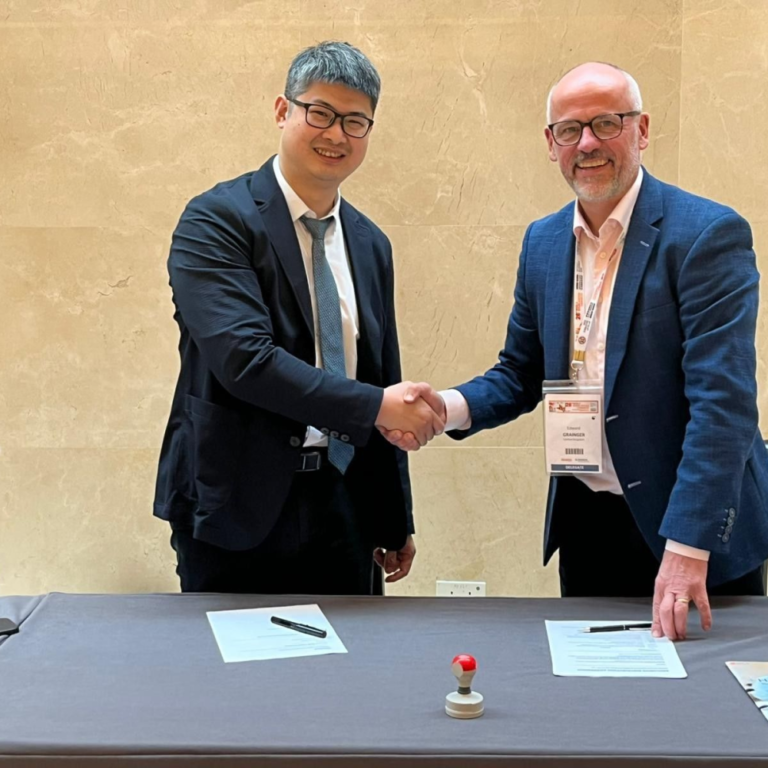
The distributor agreement being signed at the WFHSS Congress in Hong Kong was also significant. It provided a credible and relevant setting, surrounded by industry peers and professionals who share a common focus on raising standards in decontamination and patient safety.
From our perspective, this is a partnership built on alignment. We expect to challenge each other in a positive way – sharing knowledge, raising expectations and continuing to improve how we support the sector. That kind of dynamic is important if we are to deliver real value in the market.
As the relationship develops, we will continue to build on that foundation, combining Serchem’s experience in product development and NHS-aligned practice with Zenmindes’ local expertise and market insight.
Our approach to pricing and value is grounded in a simple principle: the relevant measure is not the price per bottle, but the cost per cycle.
Serchem’s formulations are highly concentrated, with dilution rates that, in many cases, make the true cost per use highly competitive with lower-priced alternatives. When assessed on a cost-per-cycle basis, the difference is often more favourable than it first appears.
However, the more important factor is performance. In CSSD and endoscopy environments, a product that does not deliver the required level of efficacy is not simply a lower-cost option – it is a more expensive one.
Ineffective cleaning can lead to reprocessing, increased use of resources, potential damage to instruments and, most importantly, increased clinical risk. The cost of underperformance far outweighs any saving at the point of purchase.
Our value proposition is therefore built around consistent efficacy, technical expertise and ongoing support. We work closely with our partners and customers to demonstrate this through product trials, validation processes and hands-on training, ensuring that solutions are applied correctly and deliver reliable results in practice.
Looking ahead, we also recognise that long-term success in China will require a locally relevant approach. As the partnership with Zenmindes develops, we are beginning to explore how local content and support capabilities can evolve to meet market expectations, while maintaining the quality and consistency that define Serchem.
Looking ahead over the next three to five years, our focus in China is on building strong foundations. With continued development in product lines, we know there will be further interest in new product launches too.
In the immediate term, that means establishing product credibility within the market and developing a close, collaborative relationship with Zenmindes, particularly across CSSD and endoscopy decontamination. These are areas where consistency, compliance and technical understanding are critical, and where we know our expertise can add real value. As Zenmindes has also highlighted, success begins with building brand awareness and trust.
As the partnership develops, our ambition is to expand both our sector reach and our presence in the market. This includes developing local content and technical support capabilities to ensure we are not only supplying products, but also supporting customers with the knowledge and guidance they need in day-to-day practice.
China is not a short-term opportunity for us. It is a strategic, long-term investment, and we are approaching it with the same mindset that has shaped our growth in other markets — building trusted partnerships, delivering consistent quality and taking the time to understand the needs of the healthcare environments we support.
We also expect the Chinese market to play an important role in shaping our global strategy. As one of the largest and most rapidly evolving healthcare markets in the world, it offers valuable insight into emerging trends, regulatory expectations and operational challenges. That learning will help inform how we continue to develop our products, services and support for customers globally.
Contact Crayfish.io for help to find your right strategic partner.
All services purchased on this platform are guaranteed by Crayfish.io. Please refer to our Terms of Service for more details on complaints and refund policy.