
Introduction: A Pivot Point for Global Business
Following the conclusion of the “Two Sessions” in March 2026, the global business community is now dissecting the officially adopted 15th Five-Year Plan (15th FYP). For decades, Western firms viewed China through the lens of high-speed growth and low-cost manufacturing. However, this new roadmap for 2026–2030 confirms the definitive end of that era, ushering in a period defined by “High-Quality Development” and “New Quality Productive Forces.”
For Western businesses, the 15th FYP is not merely a policy document; it is the active regulatory and strategic reality. Understanding the shifts in Beijing’s priorities—from quantity to quality, and from global dependence to systemic self-reliance—is essential for any business looking to enter or scale in the world’s second-largest economy over the next five years.
The Core Philosophy: “New Quality Productive Forces”
At the heart of the 15th FYP is New Quality Productive Forces (NQPF). This concept represents a departure from traditional, resource-intensive growth. Instead, the government is now actively funding and prioritizing:
- Technological Breakthroughs: Fostering “frontier” technologies like quantum computing, AI-driven R&D, and advanced aerospace.
- Green Transformation: Doubling down on the “New Three” (Electric Vehicles, Lithium-ion batteries, and Solar products).
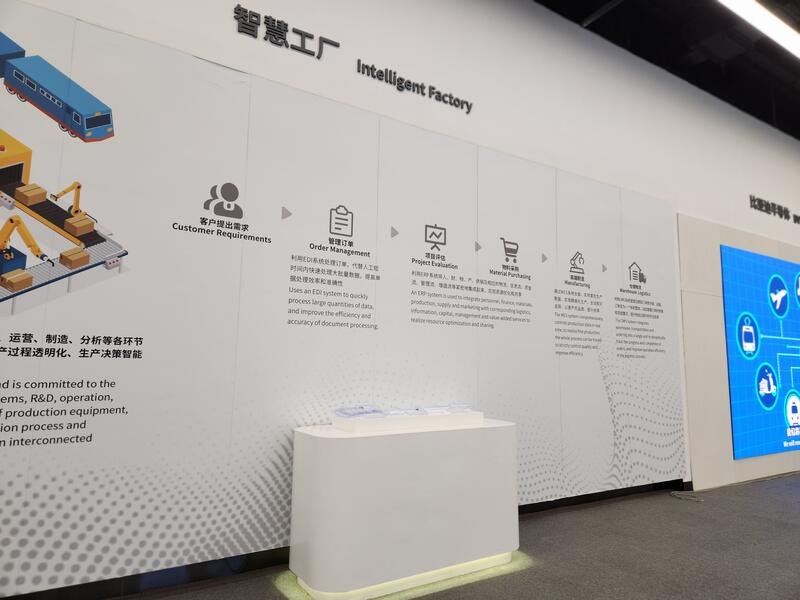
- Total Factor Productivity: Using AI and high-end digitalization to “smart-grade” traditional manufacturing sectors, from textiles to heavy machinery.
Implication for Western Firms: The “red carpet” is now highly selective. Beijing is courting foreign companies that provide “quality” inputs—specialized IP, high-precision engineering, or carbon-neutral solutions—that accelerate these national goals.
Sector-Specific Roadmaps: Where the Opportunities Lie
1. Advanced Manufacturing & Automation
The 15th FYP aims to solve the problem of industrial overcapacity by consolidating industries around smart manufacturing.
- The Opportunity: There is a demand for industrial software, high-precision sensors, and specialized robotics. European and US firms with “hidden champion” status in niche components will have better chances to find high-value partnerships as Chinese factories are told by the government to modernize.
2. Healthcare & The “Silver Economy”
China’s demographic shift is a central pillar of this FYP. With the population aging faster than almost any other nation, the government is prioritizing a comprehensive “Silver Economy.”The Opportunity: Beyond pharmaceuticals, the plan emphasizes medical imaging, AI-assisted diagnostics, and geriatric care services. There is a specific “opening up” in the services sector, allowing foreign expertise to help build China’s nascent private healthcare infrastructure.

3. Sustainability & Energy Security
Having surpassed many 2030 targets early, the 15th FYP shifts the focus from simple renewable capacity to energy storage and carbon management.
- The Opportunity: Western companies specializing in hydrogen technology, carbon capture (CCUS), and ESG reporting frameworks are in a good position. As Chinese exporters face global carbon tariffs (like the EU’s CBAM), they are looking for Western service and tech providers to help them “green” their supply chains..
4. The Digital Economy & Data Governance
The plan targets the digital economy to reach 12.5% of GDP by 2030. However, this is paired with more rigorous “Early Warning” systems for data security.The Opportunity: While consumer tech faces a mature market, “Industrial Internet” providers—those helping traditional SMEs digitize—will be receiving tailwinds and government support.
Strategic Challenges: The Reality of “Self-Reliance”
It would be remiss to ignore the challenges. The 15th FYP doubles down on technological self-reliance. In sectors like semiconductors and foundational software, the goal is to “de-risk” from Western technology.
How to Respond:
- Deep Localization: To stay relevant, Western firms including some of our clients are increasingly adopting an “In China, For China” strategy—moving R&D centers, data storage, and decision-making into the country to satisfy security requirements and speed up local market fit.
- The “Dual-Track” Strategy: Successful firms are treating their China operations as a separate ecosystem, using China-based innovation to improve their global products while maintaining a firewall to protect global IP.
Navigating the Regulatory Landscape
The 15th FYP introduces more “Macro-Monitoring” and “Risk Early-Warning” systems. This means transparency, while improving in terms of published rules, is paired with more rigorous enforcement. Foreign investment is welcomed, and it is expected to be “high-standard”—meaning it must comply with strict data privacy laws (PIPL) and environmental standards.
Conclusion: A Decade of Disruption and Opportunity
The years 2026 to 2030 will not be “business as usual” in China. The 15th Five-Year Plan outlines a nation transforming into a high-tech, green powerhouse. For Western businesses, the era of using China as a “low-cost factory” or a “passive sales market” is over.
The winners of the next five years will be those who align their corporate goals with China’s stated national priorities. Whether you are a UK biotech firm or a US software provider, success requires a nuanced, policy-led approach.
At Crayfish.io, we specialize in bridging this gap, providing the cultural, strategic, and operational expertise to ensure your business succeeds within China’s new “High-Quality” framework.
👉 Email us at Crayfish to book a complimentary first consultation with us.